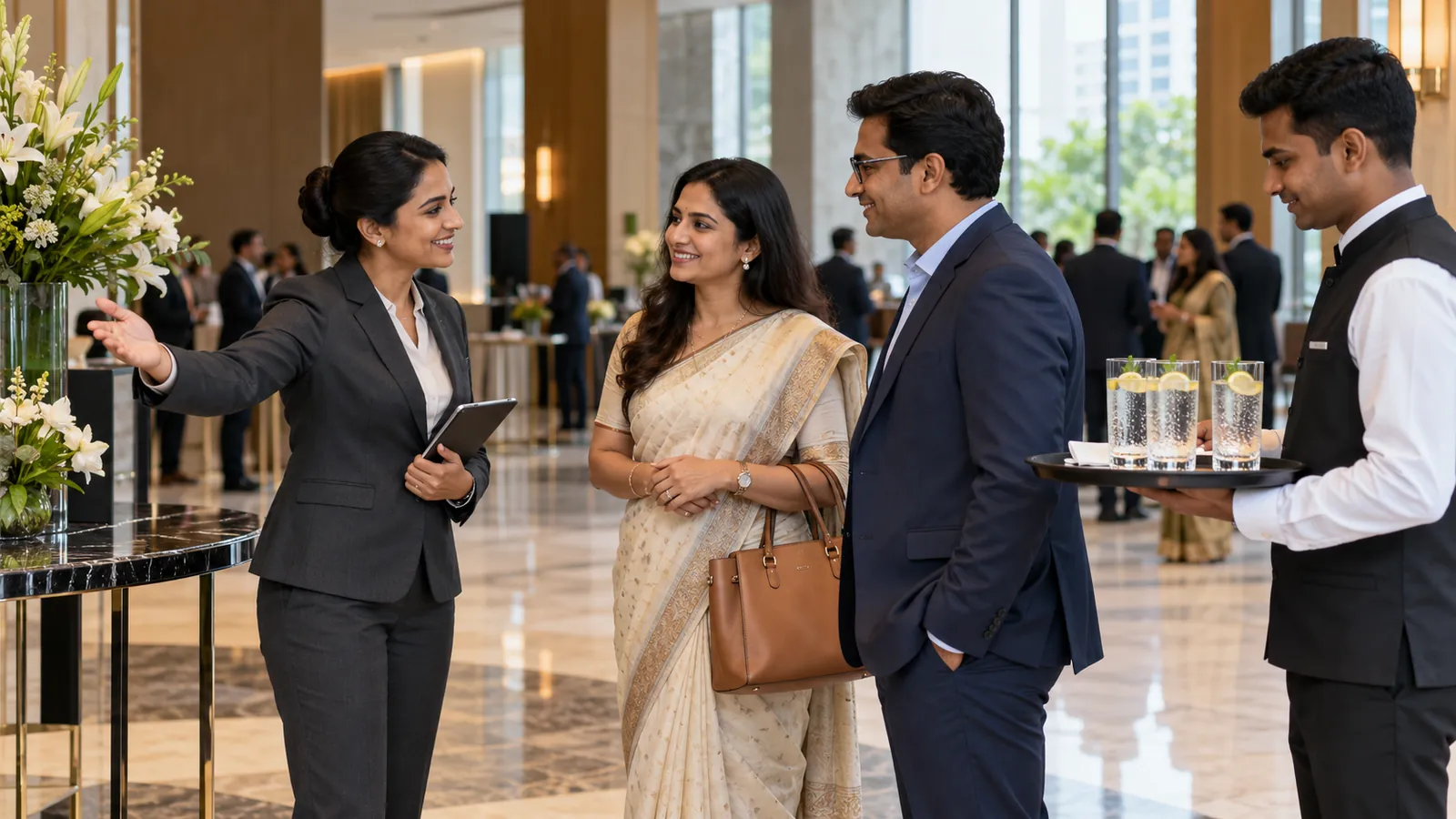
A guest reaches a product launch after a long journey. Their name is missing from the registration list, the presentation is about to begin, and nobody at the entrance knows who can approve entry. Inside, the lighting and branding look excellent. Outside, the guest is already questioning how well the evening has been organised.
This is a hypothetical situation, but it explains why corporate event staffing deserves attention before the final week of planning. For a premium brand, hospitality is part of how the business presents itself. Guests experience that promise through people, not just through a stage, invitation or display.
Start with the guest journey, not a headcount
Asking for ten staff members tells an agency very little. A leadership dinner needs a different service plan from a conference, an office celebration or a crowded product preview. The useful starting point is the sequence of experiences: arrival, registration, refreshments, presentations, dining and departure.
Walk through each stage and decide who owns it. Who handles a guest whose name is missing? Who guides a speaker to the waiting room? Who tells the service team that a presentation is running late? Clear responsibilities prevent small requests from travelling between several people without an answer.
A smart uniform cannot replace service judgement
Presentation matters, but a well-dressed team still needs practical preparation. Hospitality-trained staff should understand when to approach a table, how to offer assistance without interrupting a conversation, and when to ask a supervisor rather than improvise. These decisions are particularly important when clients and senior leaders are speaking together.
Consider a refreshment break scheduled immediately after a presentation. If the speaker continues for another fifteen minutes, serving noisily at the back of the room is not a helpful response. The supervisor needs to coordinate a revised service cue with the organiser and catering team. Training becomes useful when it supports that judgement.
Choose roles that match the occasion
Event host and hostess staffing can cover arrivals, registration and directions. Food and beverage professionals handle service within their agreed responsibilities, while a supervisor coordinates the team. At an executive dinner, event butlers may provide more attentive table service. A large exhibition may instead need stronger reception coverage and guest guidance.
Avoid assigning one person to several duties that happen simultaneously. Someone checking invitations cannot also accompany every guest upstairs. Likewise, hospitality staff should know where their role ends: security decisions, technical production and medical assistance belong with the designated specialists. A staffing plan should make those boundaries clear before guests arrive.
Brief for discretion as carefully as presentation
A corporate guest list may include investors, clients, board members or people attending a confidential discussion. Staff need instructions about who can access the list, where guests may go, and whom to contact when an unfamiliar visitor requests entry. Politeness should not mean sharing information without checking.
The briefing should also address personal photographs, social media posts and conversations overheard during service. These expectations are easier to follow when explained plainly, rather than buried in a general instruction to be professional. The aim is considerate service that respects both the guest and the business hosting them.
Make the venue briefing practical
India is not one uniform event setting. A hotel ballroom, an office terrace and a private dining venue each create different working conditions. In Mumbai, Delhi, Gurgaon or Bangalore, the planning conversation should cover arrival windows, loading access, service routes and the time available to prepare the space.
Check language requirements, guest accessibility needs, dress codes and dietary information with the organiser. Agree how staff should refer food questions to the catering lead rather than guess. Before opening the doors, the team should know the floor plan, reporting contact, break arrangements and procedure for a last-minute change.
Measure what guests actually experience
After the event, review more than attendance and photographs. Were guests directed correctly? Did queues build at registration? Were refreshments ready when required? Did the internal team repeatedly leave important conversations to solve service problems? Specific observations make the next staffing brief more useful than a general rating.
Ask the supervisor to record recurring questions and handover problems. Perhaps the signage was unclear, the reception desk needed another person, or the kitchen received schedule changes too late. Not every service issue calls for more staff; sometimes the better solution is clearer communication or a different allocation of duties.
Plan the service team with Elite Butlers
Elite Butlers provides corporate event staffing in India, including reception, hospitality and supervisory support. Share the venue, guest profile, programme and service expectations when discussing your requirement. A considered team brief gives people a clear job to do and leaves your colleagues freer to host the guests they invited. The right conversation starts with what your guests need, not simply how many uniforms the room requires.
