
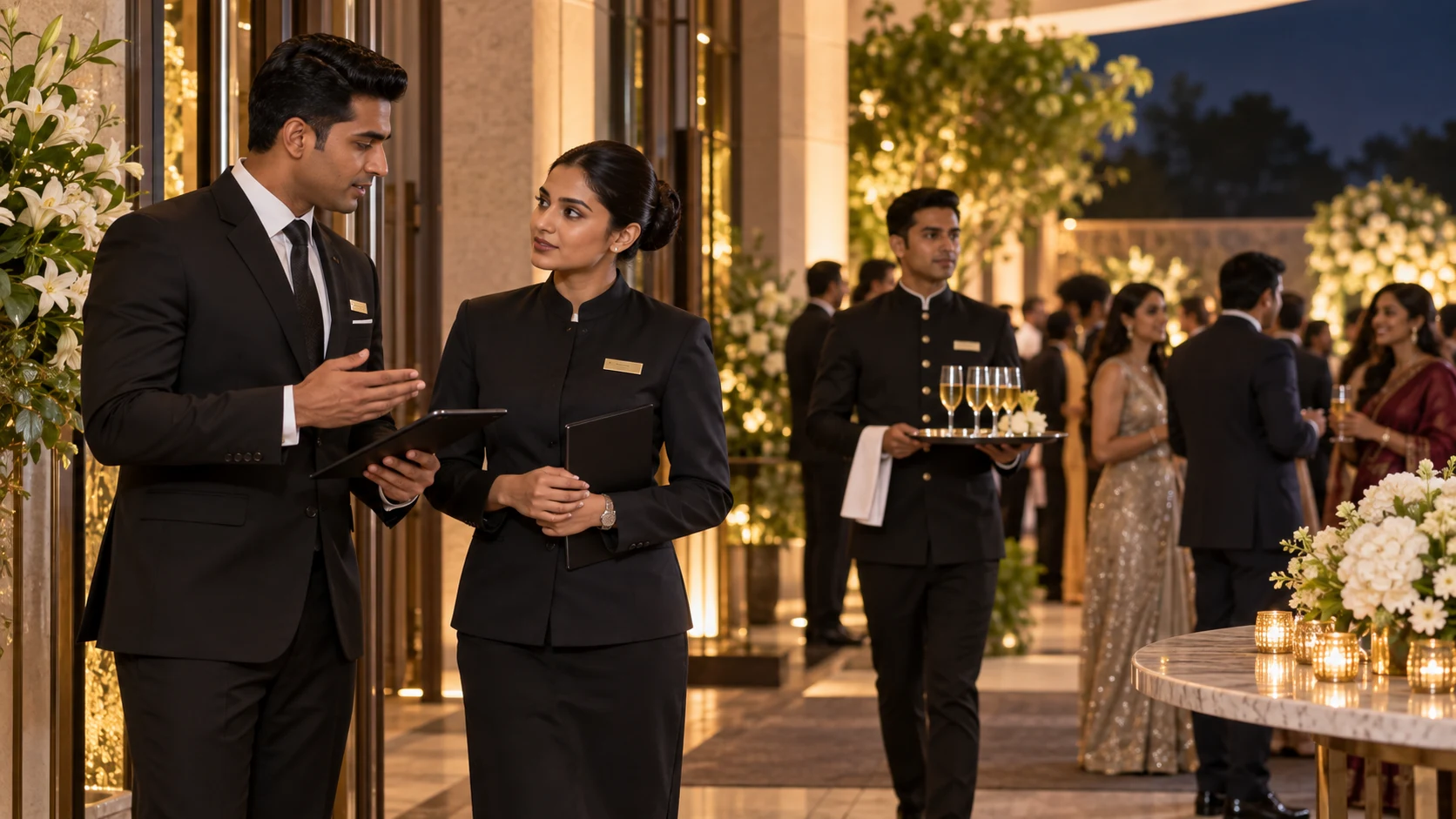
There is a moment at every grand Indian event, whether a wedding, a corporate gala or a milestone birthday, when the host stops thinking about flowers, seating charts and lighting and starts noticing something else entirely: whether the evening feels effortless.
Do drinks arrive before anyone asks for them? Is a guest’s dietary request handled quietly? Does the person clearing a table do it so smoothly that nobody notices? These details are the difference between an event that looks expensive and one that feels genuinely premium. In luxury event staffing in India, the people running the floor help shape that experience.
Luxury event staffing is often confused with simply hiring more people. It is the deliberate deployment of experienced butlers, service captains, event chefs, bar staff and guest-relations personnel who understand hospitality as a discipline, not just a shift.
The difference is most obvious in the details that hosts may not be thinking about:
Experience in luxury hotels and private hospitality can provide a useful foundation for these roles. Reading body language, understanding VIP protocols and responding calmly to last-minute changes are abilities that cannot be developed through a brief introduction on the day of an event.
Indian events, especially weddings, can present complex logistical demands. Multiple venues, hundreds of guests, elaborate menus and changing schedules may all need to be coordinated over a single weekend. A capable service team helps keep that complexity out of the guest experience.
Consider the moments that guests actually remember:
Being greeted, guided into the venue and offered a drink within minutes of arriving sets the tone for the evening. This depends on clear responsibilities and attentive staff as much as on the design of the entrance.
Nobody wants to sit with an empty glass while the mandap is being prepared or the next course is delayed. Trained staff notice these pauses, keep guests informed where appropriate and maintain service without making the wait feel uncomfortable.
A course may change, seating may need to be adjusted or a guest may have a last-minute request. The difference between a smooth resolution and a visible disruption often comes down to the calm judgement and preparation of the person handling it.
Moving 300 guests from a cocktail lawn to a dinner setting without creating bottlenecks takes coordination. Staff need to understand the route, the seating plan and the timing, with someone clearly responsible for directing the transition.
Simply increasing headcount on the day cannot replace this preparation. Teams need relevant experience, screening for temperament as well as skill, and a clear briefing before guests arrive.
A well-staffed luxury event draws on several distinct roles. The right combination depends on guest numbers, the venue, service style and the event schedule.
Butlers attend to guest needs, while service captains coordinate the floor team, oversee guest flow and manage priorities at VIP tables. Dedicated event butler services can support a more personal, discreet experience at private celebrations.
Chefs handle live counters, plated service and dietary-specific requests, often working alongside the venue’s own kitchen. Clear communication between culinary and floor teams helps keep service consistent.
Beverage teams need more than mixology skills. They must organise their stations, pace service for larger groups and work efficiently to reduce unnecessary waiting.
These are often the first and last people guests interact with. Their responsibilities can include arrivals, seating guidance, directions and departure coordination.
Less visible to guests, coordination staff help manage timelines, vendor communication and last-minute changes. Their preparation allows the front-of-house team to focus on service.
Hiring these roles as a coordinated team, rather than separately through whichever vendor happens to be available, helps create a consistent experience from arrival to departure.
Before choosing a staffing partner for a wedding, corporate gala or private celebration in India, ask these five questions:
A reliable staffing partner should be able to explain the proposed roles, supervision and briefing process clearly. Relevant hospitality training and service SOPs can help teams develop consistent standards, but those standards still need to be translated into an event-specific plan.
Confirm responsibilities before the event, including who coordinates with the venue, who handles guest requests and who makes decisions when the schedule changes. Clear ownership gives staff a practical framework for delivering attentive service.
Luxury events in India are remembered not only for what appears in photographs, but for how guests feel while they are there: attended to, unhurried and comfortable. That feeling is supported by trained butlers, service captains, event chefs and guest-relations professionals who know how to work together.
For hosts planning weddings, corporate galas or private celebrations, the question is not simply, "How many staff do we need?" It is, "Who is trained and prepared to deliver the experience we want our guests to have?"
